
Should I Prune My Trees in Fall to Protect Them During Winter in Dallas?
Yes, but timing and pruning intensity matter. For Dallas trees, fall is an important time to inspect the canopy and remove dead, broken, hazardous, or diseased branches before winter weather arrives. However, major pruning of healthy live branches is generally better saved for mid- to late winter, when trees are dormant. Proper pruning reduces hazards and prepares trees for winter without unnecessarily stressing them.
Metro Lawn Care has served Dallas-area commercial properties for more than 40 years, giving our team firsthand experience with the challenges North Texas landscapes face. Dallas trees endure intense summer heat, periods of drought, sudden temperature changes, wind, and occasional ice and freezing weather. Our approach to tree pruning and maintenance focuses on more than appearance. We consider tree structure, safety, long-term health, property needs, and seasonal conditions before recommending pruning. For property managers, HOAs, businesses, and institutions, that proactive approach can help protect valuable trees while maintaining attractive, safe commercial landscapes throughout the year.
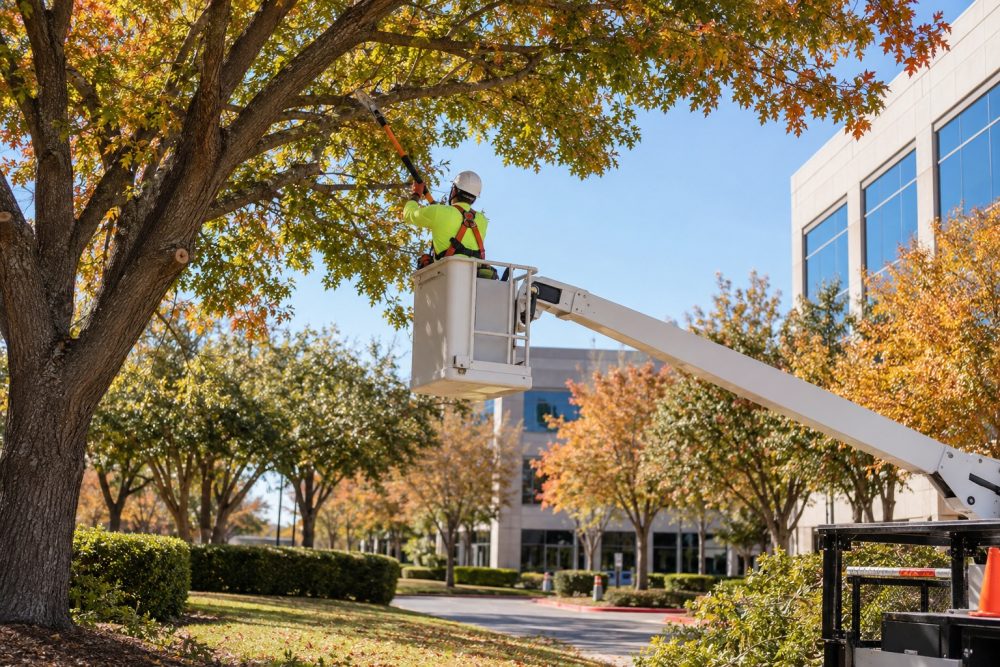
Fall Tree Care That Prepares Dallas Trees for Winter
Fall tree care should focus on identifying problems before winter exposes them. Texas A&M Forest Service notes that winter, or the dormant season, is generally the best time for pruning, particularly when live tissue needs to be removed. Dead, damaged, weak, or diseased branches can generally be removed throughout the year.
That makes fall an ideal assessment period. Property managers can identify structural concerns and immediate hazards, address necessary corrective work, and plan more extensive pruning for the dormant season.
Why Should Dead or Damaged Branches Be Removed Before Winter?
Dead, cracked, hanging, or structurally weak branches can become greater hazards when winter weather arrives. Wind, ice, and sudden cold fronts can put additional loads on compromised limbs, increasing the chance of failure.
The Texas A&M Forest Service identifies safety, clearance, and structural concerns as important reasons for pruning mature trees. On a commercial property, proactive pruning may help reduce risks around:
- Parking areas and vehicles
- Sidewalks and pedestrian entrances
- Building roofs and facades
- Drive lanes and loading areas
- Outdoor gathering spaces
- Utility and lighting infrastructure
North Texas winters are typically mild, but they are highly variable. The National Weather Service reports that freezing rain and sleet can create serious winter impacts in North Texas. Removing obvious hazards before those conditions occur gives commercial property managers one less problem to address during a winter storm.
Is Fall the Best Time for Heavy Tree Pruning in Dallas?
Not usually. While fall is useful for inspection and necessary corrective pruning, mid- to late winter is generally better for removing significant amounts of healthy live tissue.
According to the Texas A&M Forest Service, dormant-season pruning can reduce stress, and pruning before the spring growth flush helps maximize wound closure. Heavy pruning can remove too much foliage and reduce the energy reserves a tree needs for healthy growth.
A practical Dallas pruning strategy is to:
- Inspect trees in fall. Look for deadwood, cracks, hanging limbs, poor structure, and other hazards.
- Address immediate safety concerns. Remove branches that are dead, damaged, diseased, or likely to fail.
- Schedule larger pruning work appropriately. If substantial healthy growth needs to be removed, consider waiting until the tree is dormant.
- Reassess before spring. Correct structural problems before vigorous spring growth begins.
This measured approach protects the tree rather than pruning simply because the calendar says it is fall.
How Does Dallas Weather Affect Fall Tree Pruning?
Dallas weather makes preparation particularly important because winter temperatures can change quickly. The National Weather Service reports that the average first freeze at Dallas/Fort Worth occurs around November 22, based on long-term records.
The timing varies significantly from year to year. DFW has experienced a first freeze as early as October 22, demonstrating why property managers should not wait for freezing weather to begin before evaluating vulnerable trees.
Dallas trees may also enter fall already stressed. Long periods of summer heat and drought can contribute to leaf scorch, dieback, and premature dormancy. In September 2026, the Texas A&M Forest Service reported that prolonged drought and extreme heat were causing some Texas hardwoods, particularly oaks, to show early fall coloration or premature dormancy.
For a stressed tree, aggressive pruning can compound the problem. Texas A&M Forest Service advises that unnecessary pruning should be avoided when trees are already stressed. A professional assessment can help determine whether a tree needs pruning now, later in winter, or simply better water and soil management.
What Special Pruning Rules Apply to Oak Trees in Texas?
Oak trees require extra care because pruning wounds can provide an entry point for oak wilt, one of the most destructive tree diseases in Texas.
Texas A&M AgriLife Extension recommends avoiding pruning or other wounding of oaks from February through June, when oak wilt transmission risk is greater. Texas A&M also recommends immediately painting pruning cuts and other wounds on oaks to create a protective barrier.
For Dallas properties with live oaks, red oaks, or other susceptible species, pruning should therefore be planned according to both tree health and disease prevention, not convenience alone.
This is especially important on large commercial properties where numerous mature oaks can represent a significant landscape investment.
What Else Should Dallas Property Managers Do Before Winter?
Pruning is only one part of preparing trees for colder weather. Healthy trees enter winter with adequate moisture, protected root zones, and fewer sources of unnecessary stress.
Texas A&M Forest Service recommends watering trees when soil is dry before a hard freeze because moist soil holds more heat and a properly hydrated tree may be less susceptible to freeze damage. It also recommends a 2- to 3-inch layer of mulch around mature trees to reduce moisture loss and provide protection from low temperatures.
Before winter, commercial property managers should consider:
- Checking soil moisture around valuable trees
- Maintaining mulch without piling it against tree trunks
- Looking for cracks, cavities, or dead branches
- Checking limbs over buildings, walkways, and parking lots
- Watching drought-stressed trees for continued decline
- Scheduling appropriate dormant-season pruning
- Having questionable trees evaluated before severe weather arrives
The goal is not to prune every tree. It is to identify which trees need attention and provide the right care at the right time.
Frequently Asked Questions About Fall Tree Pruning in Dallas
Can you prune trees in October in Dallas?
Yes. Dead, damaged, weak, diseased, or hazardous branches can generally be addressed in October. For substantial removal of healthy live growth, waiting until the tree is fully dormant in winter is often preferable.
When is the best time to prune trees in Dallas?
For many trees, mid- to late winter is an excellent time for routine pruning because trees are dormant and spring growth has not begun. The correct timing can vary by tree species, condition, and pruning objective.
Does pruning help trees survive a freeze?
Pruning does not make a tree freeze-proof. However, removing structurally compromised branches can reduce hazards during wind or ice events, while proper watering and mulching can help trees handle winter stress.
Should oak trees be pruned in fall in Texas?
Fall can be a lower-risk period than spring for necessary oak pruning, but timing and proper wound care are important. Texas A&M recommends avoiding oak pruning from February through June and immediately painting pruning wounds to help reduce oak wilt transmission risk.
Protect Your Dallas Trees Before Winter Arrives
Fall is the time to identify tree problems before winter weather turns them into emergencies. For Dallas commercial properties, the best strategy combines timely hazard removal, careful pruning decisions, adequate moisture, and appropriately scheduled dormant-season maintenance.
Metro Lawn Care understands the demands North Texas weather places on commercial landscapes. Whether you manage an office complex, retail property, industrial site, multifamily community, or other commercial property, proactive tree care can protect your landscape investment while helping keep the property safe and attractive.
Ready to prepare your trees for winter? Contact Metro Lawn Care to schedule an evaluation and develop the right pruning plan for your Dallas commercial property.