
Why Is Fall the Best Time for Commercial Landscape Construction in Dallas?
Fall is one of the best times for commercial landscape construction in Dallas because cooler temperatures reduce plant stress, support healthy root development, and create favorable conditions for outdoor improvements. Scheduling landscape construction during the fall also allows businesses to complete upgrades before spring, improve water efficiency, and establish attractive outdoor spaces ahead of the next Texas summer.
For Dallas commercial property owners and managers, timing plays an important role in the success of landscaping investments. From office parks and retail centers to apartment communities and industrial properties, well-planned landscape construction improves curb appeal, functionality, and long-term property value.
At Metro Lawn Care, we understand the challenges of maintaining commercial landscapes in North Texas. Our team focuses on creating attractive, functional outdoor environments that can withstand Dallas’s demanding climate. Whether your property needs new planting beds, drainage improvements, irrigation upgrades, or a complete landscape transformation, planning construction during the fall can help maximize results while minimizing disruptions.
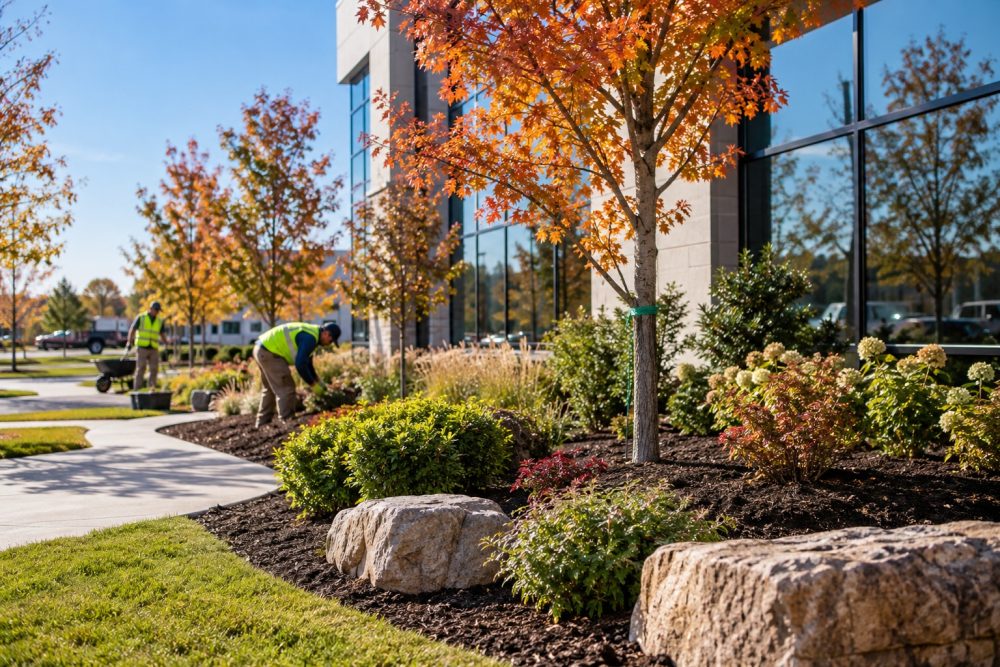
Benefits of Fall Commercial Landscape Construction in Dallas, TX
Dallas experiences intense summer heat, periods of drought, and unpredictable seasonal weather. These conditions make construction timing especially important.
Fall provides an opportunity to complete landscaping improvements under more favorable conditions while preparing commercial properties for the growing season ahead.
1. Why Does Cooler Fall Weather Make Landscape Construction Easier?
Cooler temperatures create more favorable working conditions and reduce heat-related stress on newly installed landscaping.
Dallas summers regularly bring temperatures above 90°F, creating challenges for both landscaping crews and newly installed plants.
As temperatures moderate during September, October, and November, several advantages become apparent:
- Reduced heat stress: Newly planted trees, shrubs, and ornamental plants experience less moisture loss.
- Improved working conditions: Crews can perform physically demanding construction tasks with less exposure to extreme heat.
- More manageable watering needs: Cooler weather generally reduces evaporation and plant water demand.
- Better planting conditions: Many landscape plants can begin establishing roots before the following summer.
For commercial properties with large landscaped areas, these advantages can make fall an especially practical time for construction.
However, Dallas can still experience hot weather in early fall. Scheduling should account for actual temperatures, soil conditions, and the specific plants being installed.
2. How Does Fall Planting Improve Long-Term Landscape Health?
Fall planting gives many trees, shrubs, and perennials additional time to establish their root systems before Dallas’s summer heat returns.
According to Texas A&M AgriLife Extension, fall is an excellent season for planting many trees and shrubs because roots can continue developing in relatively warm soil while cooler air temperatures reduce stress.
This makes fall particularly valuable for commercial landscape construction projects involving new vegetation.
Popular landscape improvements include:
- Installing shade trees around parking lots and pedestrian areas.
- Adding native and climate-adapted shrubs.
- Creating decorative planting beds near entrances.
- Incorporating drought-tolerant perennials.
- Replacing aging or damaged landscape materials.
For commercial properties in areas such as Downtown Dallas, North Dallas, and the surrounding business districts, healthy landscaping creates a welcoming environment for employees, customers, and visitors.
Practical Tip: Choose plants suited to North Texas soil and climate conditions. Texas sage, autumn sage, and appropriately selected native ornamental grasses can be useful options depending on the property’s sunlight, drainage, and maintenance requirements.
Plant selection matters because not every species benefits equally from fall installation. Warm-season turf and cold-sensitive plants may require different scheduling.
3. Can Fall Landscape Construction Improve Water Efficiency?
Yes. Fall is an excellent time to incorporate irrigation and drainage improvements that help commercial properties manage water more efficiently throughout the year.
Water conservation is particularly important in Dallas, where summer irrigation demands can place additional pressure on commercial landscaping budgets.
Dallas Water Utilities encourages responsible outdoor watering and recommends reducing unnecessary irrigation during cooler months.
In its November 2025 water conservation guidance, the utility noted that established North Texas lawns historically need approximately one inch of water per month from November through February, with average rainfall often meeting that requirement.
New landscaping may require additional watering during establishment, but fall generally provides opportunities to reduce unnecessary water use.
Commercial property owners can improve water efficiency through several construction upgrades:
- Smart irrigation controllers: Adjust watering schedules based on weather and landscape conditions.
- Drip irrigation: Deliver water directly to planting areas with less overspray.
- Drainage improvements: Redirect excess water away from buildings, walkways, and vulnerable planting areas.
- Mulching: Help retain soil moisture and moderate soil temperatures.
- Drought-tolerant landscaping: Reduce long-term irrigation demands through appropriate plant selection.
Completing these improvements during fall helps prepare commercial properties for the following summer.
For Dallas businesses focused on sustainability and operational efficiency, water-conscious landscape construction can provide lasting benefits.
4. What Commercial Landscape Construction Projects Are Best for Fall?
Fall is especially suitable for projects involving trees, shrubs, irrigation systems, drainage improvements, and outdoor hardscape installations.
Commercial landscape construction involves more than planting flowers or replacing grass. It includes designing and installing functional outdoor spaces that support property operations.
Some of the most valuable fall projects include:
Tree and Shrub Installation
Fall is an excellent opportunity to install many shade trees, ornamental trees, and shrubs. Establishing these plants before summer can improve their ability to tolerate future heat.
Landscape Bed Renovations
Refreshing outdated planting beds with new soil preparation, edging, mulch, and climate-appropriate plants improves curb appeal and creates a more polished appearance.
Drainage and Grading Improvements
Dallas properties can experience heavy rainfall and drainage challenges. Fall construction allows property managers to address standing water, erosion, and poor drainage before future storms.
Walkways and Hardscape Features
Installing decorative pathways, retaining walls, landscape borders, and gathering spaces can improve accessibility, functionality, and overall property appearance.
Irrigation System Upgrades
Updating irrigation infrastructure during landscape construction helps ensure new planting areas receive appropriate watering.
For properties with heavy pedestrian or vehicle traffic, scheduling these improvements strategically can also help reduce interference with daily business activities.
5. Why Should Dallas Property Managers Schedule Landscape Construction Before Spring?
Starting commercial landscape construction in the fall gives property managers additional time to complete improvements, establish new plants, and prepare outdoor spaces for spring activity.
Waiting until spring can create unnecessary scheduling pressure, especially when construction involves multiple phases.
Fall planning provides several advantages.
Better Preparation for Spring
Landscape improvements completed in fall can be ready for seasonal maintenance and spring growth.
More Time for Plant Establishment
Many newly installed trees and shrubs benefit from additional months of root development before intense summer temperatures arrive.
Improved Budget Planning
Scheduling projects before the end of the year may help businesses align improvements with available capital budgets. However, fall construction does not automatically mean lower project costs.
Reduced Operational Disruption
Property managers can coordinate construction around tenant schedules, customer traffic, and planned property activities.
For office complexes, retail centers, homeowners associations, and multifamily communities throughout Dallas, proactive scheduling can make landscape improvements easier to manage.
At Metro Lawn Care, we encourage commercial property managers to evaluate their landscaping needs before peak seasonal demands arrive.
Frequently Asked Questions About Fall Commercial Landscaping in Dallas
Is October a Good Month for Commercial Landscape Construction in Dallas?
Yes. October is often an excellent month for commercial landscape construction in Dallas because temperatures typically become more moderate. It is particularly suitable for installing many trees, shrubs, planting beds, and hardscape improvements.
Is Fall Better Than Spring for Planting Trees in North Texas?
Fall is generally preferable for planting many container-grown trees in North Texas because cooler temperatures and warm soil support root establishment. However, planting schedules should account for tree species, site conditions, and whether the tree is container-grown or bare-root.
Can Commercial Irrigation Systems Be Installed During Fall?
Yes. Fall is a practical time to install or upgrade commercial irrigation systems. Property managers can evaluate watering zones, improve efficiency, and prepare systems for future growing seasons while following applicable Dallas watering requirements.
How Early Should Businesses Plan Fall Landscape Construction?
Commercial property managers should ideally begin planning several weeks to a few months before their preferred construction date. Larger projects involving design, permits, drainage work, or multiple installation phases may require additional lead time.
Prepare Your Dallas Commercial Property for Success With Metro Lawn Care
Fall provides an excellent opportunity to invest in the appearance, health, and functionality of your commercial landscape.
By taking advantage of cooler temperatures, favorable planting conditions, and strategic project scheduling, Dallas businesses can create outdoor environments that remain attractive and functional throughout the year.
Whether you’re planning a complete landscape renovation, new planting installations, irrigation improvements, or drainage upgrades, Metro Lawn Care can help you develop a solution tailored to your property’s needs.
Ready to transform your commercial property this fall?
Contact Metro Lawn Care today to discuss your commercial landscape construction project in Dallas, TX, and start planning improvements that deliver lasting results.