
How Does Late-Season Mulching Protect Roots and Save Money on Dallas Commercial Properties?
Late-season mulching protects plant roots on Dallas commercial properties by insulating soil against winter temperature fluctuations, retaining moisture, and reducing weed growth. Applying 2 to 3 inches of organic mulch in late fall can help prevent plant stress, reduce watering needs, and lower long-term landscaping expenses by limiting plant replacements, weed control, and unnecessary maintenance.
For commercial property managers in Dallas, maintaining a healthy, attractive landscape while controlling operating costs is a year-round priority. Although winter temperatures in North Texas are generally mild, sudden freezes, dry spells, and unpredictable weather can take a toll on trees, shrubs, and ornamental plants.
At Metro Lawn Care, we understand the challenges of maintaining commercial landscapes in Dallas’s changing climate. Our team focuses on proactive landscape maintenance solutions that protect your investment while helping you avoid preventable expenses. Late-season mulching is one of the simplest and most cost-effective ways to prepare your property for winter.
Whether you manage an office complex, retail center, HOA community, or industrial property, properly timed mulching can help your landscape remain healthy, attractive, and easier to maintain throughout the colder months.
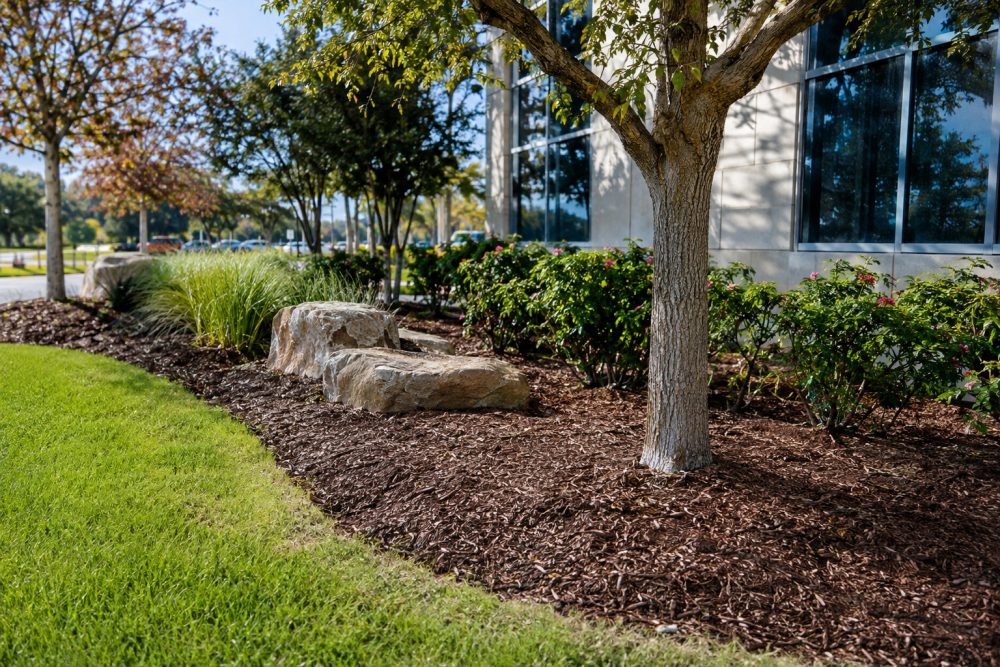
Benefits of Fall Mulching for Commercial Landscape Maintenance in Dallas
Late-season mulching does more than improve curb appeal. It creates a protective layer over the soil that supports root health, improves moisture retention, and reduces seasonal maintenance demands.
For Dallas commercial properties, the benefits are particularly valuable because North Texas experiences significant temperature fluctuations, occasional freezing weather, and periods of limited rainfall.
1. How Does Late-Season Mulching Protect Plant Roots During Dallas Winters?
Mulch protects plant roots by moderating soil temperatures and reducing exposure to sudden temperature changes. This insulation is especially helpful during North Texas cold fronts, when temperatures can drop rapidly.
Although many Dallas landscapes contain hardy plants, their roots can still experience stress when soil temperatures fluctuate. Newly installed trees, shrubs, and ornamental plants are particularly vulnerable because their root systems may not be fully established.
A properly applied mulch layer helps by:
- Regulating soil temperature: Reducing rapid temperature changes around plant roots.
- Protecting shallow roots: Providing insulation for roots near the soil surface.
- Reducing moisture loss: Helping soil retain water during dry winter conditions.
- Supporting soil health: Gradually adding organic matter as natural mulch decomposes.
According to the Texas A&M AgriLife Extension Service, organic mulch helps conserve soil moisture, moderate soil temperatures, and suppress weeds.
For commercial property managers, these benefits can mean fewer stressed plants and a lower likelihood of costly landscape replacements following winter weather.
2. Can Fall Mulching Reduce Commercial Landscaping Costs?
Yes. Late-season mulching can reduce commercial landscaping costs by lowering moisture loss, suppressing weeds, and helping protect valuable landscape plants. While mulch requires an upfront investment, its protective benefits can reduce several ongoing maintenance expenses.
For example, commercial properties with large planting beds often require regular weed removal, irrigation adjustments, and seasonal plant replacements. Proper mulching can help reduce the frequency or severity of these needs.
Here are four ways late-season mulching can support your landscaping budget:
- Lower irrigation demand: Mulch slows evaporation, helping soil retain moisture between watering cycles.
- Reduced weed control: A consistent mulch layer blocks sunlight from reaching many weed seeds, limiting germination.
- Fewer plant replacements: Healthier root systems may improve plant survival during stressful weather conditions.
- Improved soil conditions: Decomposing organic mulch contributes organic matter that supports long-term soil health.
These savings are particularly relevant for Dallas office parks, shopping centers, and HOA communities with extensive landscaped areas.
However, mulch should complement an effective irrigation and maintenance program rather than replace it. Actual savings depend on property size, plant selection, existing landscape conditions, and maintenance practices.
3. When Is the Best Time to Apply Mulch in Dallas?
Late October through November is generally an excellent time to refresh mulch on Dallas commercial properties. This timing allows property managers to prepare planting beds before the coldest part of winter while taking advantage of cooler fall conditions.
Dallas typically experiences its first fall freeze around mid-November, although the timing varies from year to year.
Applying mulch during late fall helps establish a protective soil covering before prolonged cold weather arrives.
For the best results, commercial property managers should:
- Inspect existing mulch levels before adding new material.
- Remove excessive weeds and debris from planting beds.
- Water dry soil as needed before applying mulch.
- Maintain approximately 2 to 3 inches of total mulch depth.
- Keep mulch several inches away from tree trunks and shrub stems.
Avoid piling mulch directly against tree trunks, a practice commonly called “volcano mulching.” Excess mulch against bark can trap moisture and contribute to decay, disease, and root problems.
Proper installation is just as important as timing when protecting the health of your landscape.
4. What Type of Mulch Works Best for Dallas Commercial Properties?
Organic mulch, particularly shredded hardwood or wood chips, is a practical choice for many Dallas commercial landscapes. These materials provide insulation, help retain soil moisture, and gradually improve soil structure as they break down.
The best mulch depends on your property’s appearance, maintenance requirements, and plant selection.
Common options include:
- Shredded hardwood mulch: Offers a polished appearance and works well in commercial planting beds.
- Wood chips: Provide durable ground coverage and are useful around established trees and larger landscape areas.
- Pine bark mulch: Offers attractive texture and moisture retention for ornamental beds.
Inorganic materials, such as decorative stone, may be appropriate for certain landscape designs but do not provide the same organic matter benefits as wood-based mulch.
For Dallas commercial properties with extensive planting beds, selecting a durable mulch that complements the landscape design can help reduce the frequency of replenishment.
Metro Lawn Care can help property managers evaluate mulch options based on their landscape’s specific needs and maintenance goals.
5. How Can Property Managers Maximize the Value of Late-Season Mulching?
The best way to maximize mulching value is to incorporate it into a comprehensive commercial landscape maintenance program. This approach helps ensure mulch is applied at the proper depth, in the right locations, and only where needed.
For example, a property with existing mulch may need only a light refresh rather than a complete replacement. Adding unnecessary material increases costs and can create problems for plant roots.
Property managers should also consider how mulch works alongside irrigation, drainage, pruning, and seasonal landscape inspections.
A coordinated maintenance approach helps identify potential issues before they become expensive repairs.
At Metro Lawn Care, we focus on practical solutions that support plant health, maintain professional curb appeal, and help Dallas businesses manage landscaping expenses more effectively.
Frequently Asked Questions About Late-Season Mulching in Dallas
Is November Too Late to Mulch in Dallas?
No. November is generally a good time to mulch in Dallas because temperatures are cooling and winter freezes may be approaching. Mulch can still provide root protection when applied after the first freeze.
How Deep Should Mulch Be Around Trees and Shrubs?
Most trees and shrubs benefit from approximately 2 to 3 inches of organic mulch. Keep mulch away from trunks and stems to prevent excess moisture buildup and potential decay.
Does Mulching Really Help Reduce Water Bills?
Mulching can reduce landscape water demand by limiting evaporation and retaining soil moisture. Actual water bill savings depend on irrigation scheduling, weather, soil conditions, and the size of the landscaped area.
Should Commercial Properties Replace Mulch Every Fall?
Not necessarily. Existing mulch should be inspected and refreshed only as needed to maintain the recommended depth. Completely replacing mulch every year may create unnecessary expenses.
Protect Your Dallas Commercial Landscape With Metro Lawn Care
Late-season mulching is a small investment that can deliver meaningful long-term benefits for your commercial property. From protecting roots against unpredictable winter weather to conserving moisture and reducing maintenance demands, properly installed mulch helps preserve both your landscape and your budget.
At Metro Lawn Care, we help Dallas commercial property managers maintain healthy, attractive landscapes through proactive, cost-conscious maintenance solutions.
Ready to protect your commercial landscape and reduce seasonal maintenance costs? Contact Metro Lawn Care today to discuss professional mulching and landscape maintenance services for your Dallas property.