How Can You Protect Your Dallas Commercial Irrigation System From Freeze Damage?
Winterizing a commercial irrigation system in Dallas helps prevent freeze damage by shutting off the irrigation water supply, draining vulnerable components, insulating exposed pipes, and protecting backflow prevention devices before freezing temperatures arrive. Professional irrigation winterization reduces the risk of cracked pipes, damaged valves, costly water leaks, and unexpected landscape repairs when warmer weather returns.
Dallas winters may be milder than those in northern states, but sudden temperature drops can still cause significant problems for commercial properties. A single hard freeze can damage irrigation components that have performed reliably throughout the growing season.
For property managers and business owners, protecting an irrigation system is about more than avoiding repairs. It helps preserve landscape investments, control maintenance expenses, and ensure the property is ready for spring.
At Metro Lawn Care, we understand the challenges of maintaining commercial landscapes in North Texas. Our approach emphasizes proactive maintenance, dependable service, and long-term property care. By preparing irrigation systems before winter weather arrives, commercial property owners can reduce preventable damage and protect the landscapes that contribute to their property’s appearance and value.
Commercial Irrigation Winterization in Dallas: Essential Steps to Prevent Costly Repairs
Winterizing a commercial sprinkler system requires more than simply turning off the irrigation controller. Water trapped inside exposed pipes, valves, and backflow prevention assemblies can freeze, expand, and damage system components.
The National Weather Service defines freezing temperatures as 32°F or below. However, actual irrigation damage depends on factors such as exposure, insulation, the duration of freezing conditions, and whether water remains trapped inside vulnerable components.
For Dallas commercial properties, a preventive winterization plan can help minimize these risks while supporting reliable irrigation performance throughout the year.
1. Why Do Commercial Irrigation Systems in Dallas Need Winterization?
Dallas irrigation systems need winterization because sudden freezes can damage water-filled components, even when freezing temperatures last only a relatively short time.
North Texas experiences considerable winter temperature fluctuations. Mild afternoons can quickly give way to overnight freezes, leaving exposed irrigation equipment vulnerable.
The February 2021 Texas winter storm demonstrated how severe winter weather can affect infrastructure across the Dallas-Fort Worth region. While that event was unusually extreme, it reinforced the importance of preparing outdoor water systems for unexpected cold weather.
Commercial irrigation systems contain several components susceptible to freeze damage:
- Backflow prevention devices: Exposed assemblies can crack when trapped water freezes.
- Irrigation valves: Freezing water can damage valve housings, seals, and internal components.
- Aboveground pipes: Unprotected piping can split during prolonged freezing conditions.
- Sprinkler heads: Water trapped in exposed components may cause cracking or operational problems.
- Manifolds and fittings: Freeze-related expansion can weaken connections and create leaks.
For office complexes, retail centers, HOAs, and other commercial properties, these failures can lead to unexpected repair costs and landscape disruptions.
Preventive maintenance is generally more manageable than addressing extensive damage after a winter storm.
2. When Should You Winterize Your Irrigation System in Dallas?
Commercial irrigation systems in Dallas should be prepared before the first significant freeze, typically during late fall, with additional precautions taken whenever freezing weather is forecast.
Because North Texas weather varies from year to year, property managers should monitor local forecasts rather than rely on a fixed winterization date.
The National Weather Service provides freeze watches and warnings that can help property managers anticipate dangerous temperatures.
A practical winter preparation schedule includes:
- October through November: Schedule an irrigation inspection and identify vulnerable equipment.
- Before freezing temperatures: Shut off or isolate irrigation water where appropriate and protect exposed components.
- During winter: Monitor weather forecasts and check protective coverings following storms.
- Before spring startup: Inspect the system for leaks, damaged components, and proper operation.
Commercial properties with large irrigation networks may require additional preparation time.
Scheduling service early also helps avoid the increased demand for irrigation technicians that often accompanies an approaching freeze.
3. What Are the Most Important Steps in Commercial Irrigation Winterization?
Effective irrigation winterization focuses on removing or isolating water from vulnerable components and protecting equipment that cannot be completely drained.
The exact procedure depends on the irrigation system’s design, drainage capabilities, and backflow prevention requirements.
Inspect and Shut Off the Irrigation Water Supply
A professional inspection should identify the irrigation shutoff valve, exposed piping, backflow prevention assembly, and other freeze-sensitive equipment.
When appropriate, the irrigation water supply should be shut off to prevent additional water from entering vulnerable sections.
Property managers should also verify that the irrigation controller is set correctly for winter conditions.
Drain Vulnerable Components
Water remaining inside irrigation equipment can expand when frozen, potentially cracking pipes or fittings.
Depending on the system, winterization may involve manual drainage, automatic drain valves, or professional compressed-air blowout procedures.
Not every Dallas irrigation system requires a full compressed-air blowout. Improper air pressure can damage equipment, so this procedure should be performed only when appropriate and by qualified personnel.
Protect Backflow Prevention Devices
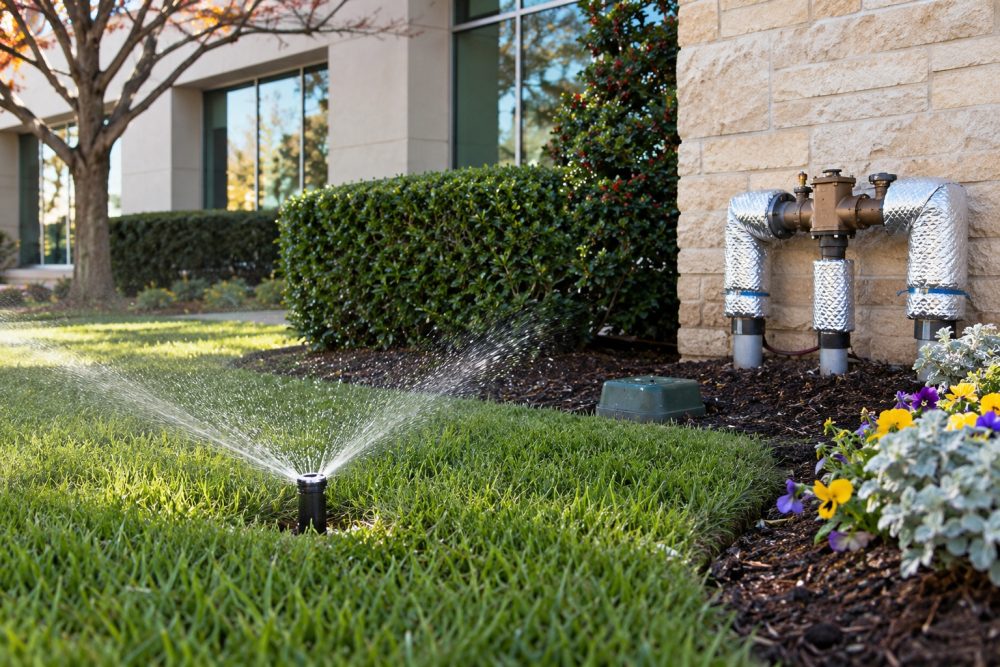
Backflow prevention assemblies are particularly vulnerable because they are often installed aboveground.
Proper protection may involve approved insulation, protective enclosures, and manufacturer-recommended drainage procedures.
Backflow assemblies should never be modified or improperly drained in ways that compromise their safety functions or violate local plumbing requirements.
Inspect Sprinkler Heads and Valves
Damaged sprinkler heads, leaking valves, and exposed connections should be identified before winter.
Addressing these problems early reduces the likelihood of additional damage during freezing weather.
A professional winterization inspection can also uncover maintenance concerns that might otherwise go unnoticed until spring.
4. How Does Irrigation Winterization Save Commercial Property Owners Money?
Irrigation winterization helps reduce maintenance expenses by preventing avoidable equipment failures, water leaks, and landscape damage.
Commercial irrigation systems represent a substantial investment, especially on properties with extensive turf areas, landscaped entrances, and multiple irrigation zones.
When freeze damage occurs, repair expenses may include replacing pipes, repairing backflow devices, locating underground leaks, and restoring damaged landscaping.
Winterization supports cost control in several ways:
- Fewer emergency repairs: Preventive maintenance can reduce unexpected service calls following a freeze.
- Reduced water waste: Identifying damaged connections helps prevent leaks when irrigation resumes.
- Longer equipment life: Protecting valves, piping, and other components helps preserve system performance.
- Improved landscape protection: Reliable irrigation supports healthy turf, trees, and planting beds when the growing season returns.
- Better maintenance planning: Scheduled inspections make expenses more predictable.
The U.S. Environmental Protection Agency’s WaterSense program emphasizes the importance of irrigation system maintenance and regular inspections for improving outdoor water efficiency.
For Dallas property managers, winterization is one part of a broader water management strategy that protects both operating budgets and landscape investments.
5. Why Should Dallas Businesses Choose Professional Irrigation Winterization?
Professional irrigation winterization helps ensure that commercial systems receive appropriate freeze protection without damaging sensitive equipment or compromising backflow safety.
Commercial irrigation systems are often more complex than residential sprinkler systems. Multiple zones, controllers, specialized valves, and extensive piping networks require careful evaluation.
An experienced irrigation professional can determine which components need drainage, insulation, repairs, or additional protection.
Professional service also helps property managers identify potential issues before they become expensive emergencies.
At Metro Lawn Care, we understand that commercial landscapes require consistent attention throughout every season. A proactive approach to irrigation maintenance helps businesses maintain attractive properties while minimizing avoidable disruptions.
For Dallas commercial properties, winter preparation should be part of a year-round landscape maintenance strategy rather than a last-minute response to freezing weather.
Frequently Asked Questions About Dallas Irrigation Winterization
Can sprinkler pipes freeze in Dallas, Texas?
Yes. Sprinkler pipes and exposed irrigation components can freeze when temperatures remain low enough for water inside them to freeze. Aboveground piping and backflow prevention assemblies are particularly vulnerable.
Do Dallas sprinkler systems need to be blown out every winter?
Not necessarily. Some irrigation systems can be winterized through appropriate drainage and insulation, while others may benefit from professional compressed-air blowout procedures. The correct method depends on the system’s design and exposure.
What happens if you don’t winterize a commercial irrigation system?
An unprotected irrigation system may experience cracked pipes, damaged valves, broken backflow components, or leaks when freezing water expands. These problems can result in costly repairs and delayed spring irrigation.
Should commercial irrigation systems remain turned off all winter in Dallas?
Not always. Some Dallas landscapes require supplemental watering during dry winter periods. Irrigation schedules should account for weather conditions, plant needs, local watering restrictions, and the system’s freeze-protection requirements.
Protect Your Dallas Commercial Irrigation System Before the Next Freeze
Freezing temperatures can arrive unexpectedly in North Texas, but irrigation damage does not have to catch your business off guard.
Proactive winterization helps protect your commercial irrigation investment, reduce unexpected repair expenses, and keep your landscape prepared for the growing season ahead.
Ready to protect your commercial property from winter irrigation damage?
Trust Metro Lawn Care for professional commercial landscape maintenance and proactive irrigation system care in Dallas, TX.
Contact Metro Lawn Care today to discuss your property’s irrigation winterization needs and prepare for colder weather.