Commercial Water Management in Dallas Dry Months
How Does a Commercial Water Management Program Protect Dallas Properties During Dry Months?
A commercial water management program helps Dallas properties stay healthy during dry months by delivering the right amount of water at the right time, reducing waste, preventing plant stress, lowering utility costs, and improving irrigation efficiency. It also helps businesses comply with local watering restrictions while protecting the long-term value and appearance of their landscapes.
Metro Lawn Care understands that maintaining commercial landscapes in Dallas requires more than simply turning on an irrigation system. North Texas experiences extended periods of intense heat, limited rainfall, and high evaporation rates that place significant stress on turf, trees, and ornamental plants. Without a strategic watering plan, businesses often spend more on water while seeing declining landscape health. Our experienced team creates customized water management programs that monitor irrigation performance, adjust schedules based on seasonal conditions, and identify problems before they become costly repairs. Whether your property is near Downtown Dallas, Las Colinas, Plano, Frisco, or throughout the greater Dallas area, Metro Lawn Care helps protect your investment with proactive water management designed specifically for North Texas conditions.
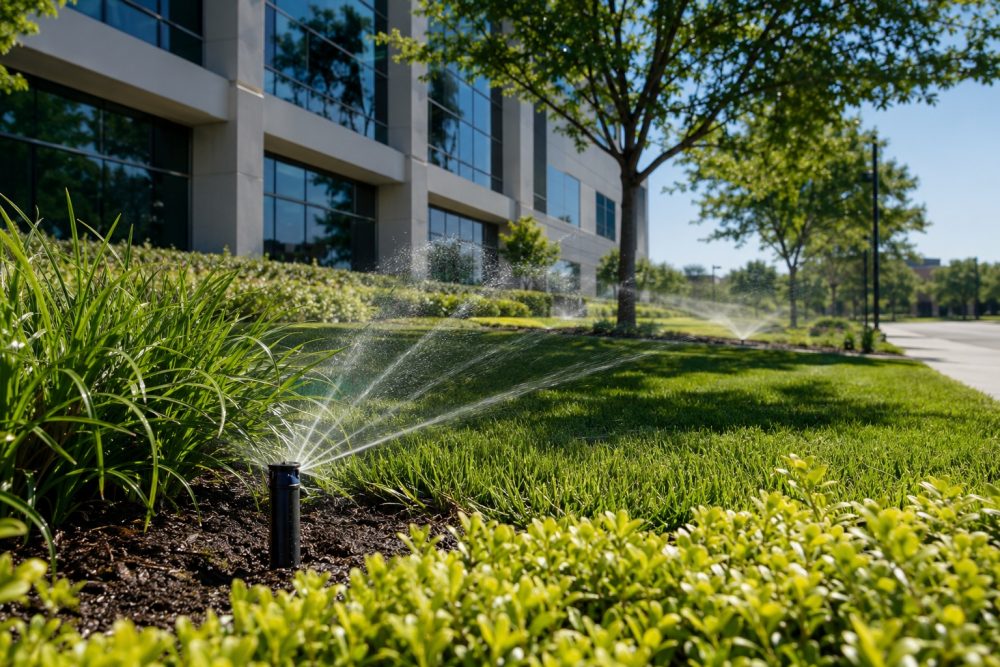
Benefits of Commercial Water Management Programs in Dallas
Why is a water management program better than simply watering more?
More water does not equal healthier landscaping. The goal is to provide plants with exactly what they need while avoiding waste.
A professional water management program includes:
- Regular irrigation system inspections
- Seasonal controller adjustments
- Leak detection and repairs
- Weather-based watering schedules
- Coverage evaluations to eliminate dry spots
- Water conservation strategies that reduce unnecessary irrigation
According to the U.S. Environmental Protection Agency (EPA), landscape irrigation is one of the largest sources of outdoor water use for commercial properties, making efficient irrigation one of the greatest opportunities to reduce water consumption.
What challenges do Dallas commercial properties face during dry months?
Dallas summers create several conditions that make landscape management difficult.
These include:
- Triple digit temperatures
- High evaporation rates
- Infrequent rainfall
- Heavy clay soils that can lead to runoff
- Increased water restrictions during drought conditions
The combination of heat and evaporation means that much of the water applied at the wrong time of day never reaches plant roots. According to the EPA WaterSense program, irrigation should focus on replacing water lost through evapotranspiration, not following a fixed schedule.
For commercial properties with large turf areas, office parks, retail centers, HOA communities, healthcare campuses, or industrial facilities, poor irrigation practices can quickly lead to expensive landscape damage.
How does proper irrigation save money?
Efficient irrigation reduces operating costs while protecting landscaping investments.
A professional water management program helps businesses save money by:
- Reducing water waste from broken sprinkler heads or leaks.
- Preventing overwatering that increases water bills.
- Avoiding costly replacement of turf, shrubs, and trees.
- Extending the lifespan of irrigation equipment.
- Lowering maintenance costs caused by unhealthy landscapes.
The EPA estimates that significant amounts of outdoor water are wasted through inefficient irrigation practices, including overwatering and poorly maintained systems. Smart irrigation equipment and regular monitoring can dramatically improve efficiency.
What should a commercial water management program include?
An effective program goes beyond adjusting sprinkler timers.
Metro Lawn Care evaluates every aspect of a property’s irrigation performance, including:
Irrigation Audits
Regular inspections identify:
- Broken heads
- Blocked nozzles
- Uneven coverage
- Pressure issues
- Underground leaks
Seasonal Schedule Adjustments
Water requirements change throughout the year.
Rather than using one watering schedule year-round, controllers should be adjusted based on:
- Temperature
- Rainfall
- Plant growth
- Soil moisture
- Seasonal daylight hours
Smart Irrigation Technology
Modern irrigation controllers use local weather data to make automatic adjustments, reducing unnecessary watering while maintaining healthy landscapes.
Landscape Health Monitoring
Healthy turf and plants provide early warning signs of irrigation problems. Regular inspections help catch issues before they spread across the property.
Are there watering rules commercial properties should follow in Dallas?
Yes. Dallas has irrigation conservation measures designed to reduce water waste during warmer months.
From April through October, landscape irrigation is generally prohibited between 10:00 a.m. and 6:00 p.m. because watering during the hottest part of the day leads to excessive evaporation. Following these requirements not only conserves water but also improves irrigation efficiency.
For businesses managing multiple commercial properties, keeping irrigation schedules compliant can become difficult without professional oversight.
Frequently Asked Questions
How often should commercial landscapes be watered during Dallas summers?
There is no universal schedule. Watering should be based on weather conditions, soil moisture, plant needs, and evapotranspiration rather than a fixed number of days each week.
Can smart irrigation controllers reduce water bills?
Yes. Weather-based smart controllers automatically adjust watering schedules to avoid unnecessary irrigation, helping many commercial properties reduce water waste while maintaining healthy landscapes.
What are the signs that a commercial irrigation system needs attention?
Common signs include brown patches, standing water, broken sprinkler heads, uneven plant growth, rising water bills, runoff onto sidewalks or parking lots, and irrigation spraying pavement instead of landscaping.
Is a water management program only necessary during drought?
No. A year-round water management program keeps irrigation systems operating efficiently in every season, helping prevent problems before dry weather arrives.
Protect Your Commercial Landscape with Metro Lawn Care
Dry months in Dallas do not have to mean stressed landscapes, rising water bills, or costly plant replacements. A professionally managed water management program helps your property remain attractive, healthy, and efficient throughout the year while supporting water conservation and regulatory compliance.
Ready to protect your commercial landscape during Dallas’ dry months? Contact Metro Lawn Care today to schedule a customized commercial water management consultation.