
When to Prune Trees on Dallas Commercial Properties
For most commercial properties in Dallas, the best time for routine tree pruning is during the winter months, when cooler temperatures, typically greater rainfall, and lower insect activity reduce stress on trees. Hazardous, broken, or damaged branches should be addressed immediately regardless of season. Oak pruning requires extra caution because Texas experts recommend avoiding pruning oaks from February through June to reduce oak wilt risk.
Metro Lawn Care helps Dallas property managers approach tree care as more than an appearance issue. Strategic pruning supports tree health, protects tenants and visitors, improves visibility, and keeps commercial landscapes looking professionally maintained. Timing matters because Dallas trees face intense summer heat, periods of drought, severe thunderstorms, and disease concerns that can make unnecessary pruning stressful or risky. By combining seasonal planning with routine inspections, property managers can address developing problems before they become costly emergencies. A thoughtful commercial tree maintenance program also helps balance curb appeal with practical concerns such as pedestrian access, parking areas, building clearance, and liability.
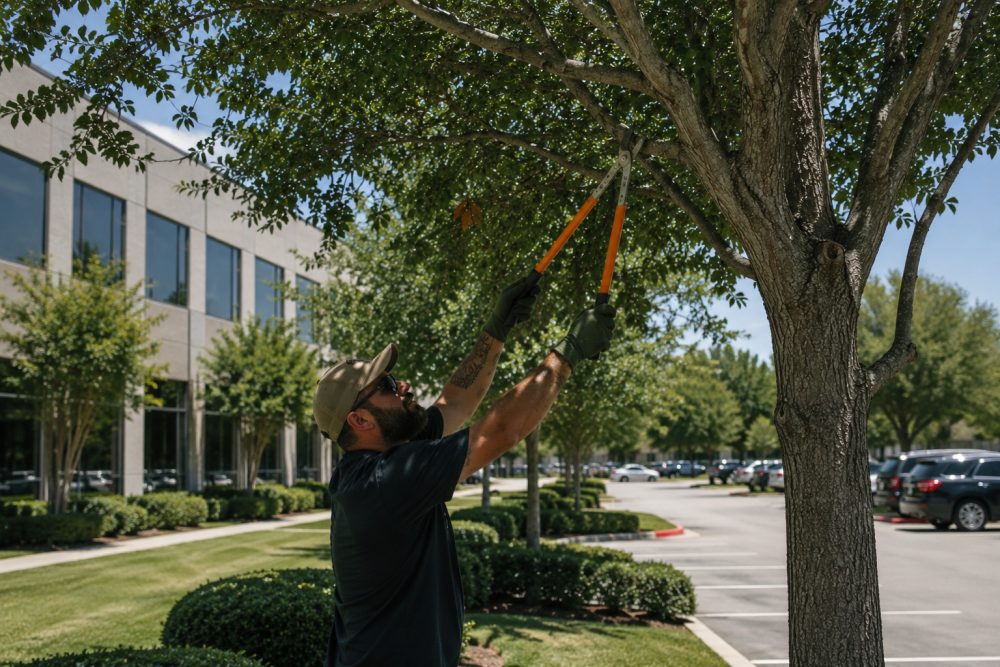
Seasonal Tree Pruning in Dallas for Health, Safety, and Curb Appeal
The right pruning schedule depends on why a tree needs attention. Routine structural pruning can usually be planned for winter, while dangerous limbs, storm damage, and certain clearance issues should not wait for the ideal season.
For commercial property managers, a seasonal approach makes it easier to budget for tree care while keeping safety concerns at the top of the priority list.
Why Is Winter the Best Time to Prune Trees in Dallas?
Winter is generally the preferred season for routine pruning because Dallas trees experience fewer environmental stressors during cooler weather.
The City of Dallas Forestry division specifically identifies winter as the best pruning period in Dallas because temperatures are cooler, rainfall is normally greater, and insect activity is lower. According to the city, these conditions help decrease stress on trees.
Winter pruning can be especially useful for commercial properties because it provides an opportunity to:
- Remove dead, weak, or poorly positioned branches.
- Improve tree structure before spring growth begins.
- Increase clearance around buildings, parking areas, and walkways.
- Address branches obstructing signage or visibility.
- Improve the appearance and consistency of the landscape.
- Identify structural concerns before severe spring weather.
Late fall through winter can therefore become a valuable preventive-maintenance window for Dallas property managers.
When Should a Property Manager Prune Trees Immediately?
A dangerous branch should be addressed as soon as practical, even when it is not the preferred pruning season.
Seasonal recommendations should never override an immediate safety concern. The City of Dallas notes that a broken branch posing a risk of damage or injury should be removed promptly.
Property managers should request an inspection when they notice conditions such as:
- Broken, hanging, or partially detached limbs.
- Large dead branches above parking or pedestrian areas.
- Limbs contacting buildings or creating an immediate obstruction.
- Branches interfering with necessary visibility.
- Storm-damaged tree canopies.
- Cracks, splits, or other indications of structural failure.
This distinction is important for liability management. Routine pruning can be scheduled strategically, but a known hazard near an entrance, sidewalk, roadway, employee area, or parking lot may require immediate action.
Dallas also establishes clearance considerations for public areas. City Forestry identifies 15 feet of vertical clearance over roadways and 8 feet over pedestrian areas as clearance requirements set by city code.
When Should Oak Trees Be Pruned in Dallas?
Routine oak pruning should generally be scheduled outside February through June because fresh wounds during this period can increase the risk of oak wilt transmission.
Texas Oak Wilt, a resource developed in cooperation with organizations including the Texas A&M Forest Service and Texas A&M AgriLife Extension Service, recommends avoiding pruning or wounding oaks from February 1 through June 30. Sap-feeding beetles that can carry oak wilt spores are most active during the spring, while fungal mats on infected red oaks are also more likely to occur.
For property managers, the practical guidelines are straightforward:
- Plan routine oak pruning for lower-risk periods. Late fall and winter are preferred, with Texas Oak Wilt identifying late fall as an especially good period.
- Avoid unnecessary oak wounds from February through June. Postpone cosmetic pruning and nonessential thinning.
- Do not ignore safety hazards. Hazardous limbs and storm damage may still require immediate work.
- Protect fresh oak wounds. Texas Oak Wilt recommends immediately painting pruning cuts and other oak wounds regardless of the season.
Oak wilt prevention is particularly important because once the disease becomes established, it can spread through interconnected oak root systems. Prevention should therefore be part of a commercial property’s long-term tree management strategy, not simply a response after symptoms appear.
How Does Pruning Reduce Liability and Improve Curb Appeal?
Good pruning removes or manages foreseeable problems while preserving the tree’s natural structure and appearance.
On a commercial property, trees influence both the visitor experience and the site’s risk profile. An overgrown canopy can hide signage, obstruct visibility, interfere with pedestrian movement, or place weak branches over areas where people and vehicles regularly gather.
Proper pruning can help:
- Maintain safer entrances and walkways.
- Improve sightlines around parking lots and drive lanes.
- Create appropriate clearance around structures.
- Reduce dead or compromised branches in high-traffic areas.
- Keep trees proportional and visually attractive.
- Prevent branches from overwhelming signs, lighting, or architectural features.
Pruning should not mean indiscriminately cutting back a canopy. The City of Dallas emphasizes that every pruning cut creates a wound, which the tree must compartmentalize. That makes selective, purposeful pruning preferable to unnecessary cutting.
Practices such as tree topping or excessive crown thinning should also be avoided. Texas Oak Wilt’s pruning guidance specifically warns against injurious practices including topping and excessive crown thinning.
How Should Dallas Property Managers Build a Seasonal Pruning Plan?
A commercial tree program works best when pruning is based on inspections, species, site conditions, and risk rather than a fixed calendar alone.
A practical Dallas schedule can look like this:
Winter: Conduct comprehensive tree inspections and complete most routine structural pruning. Address clearance issues and prepare trees for the upcoming growing season.
Spring: Limit unnecessary pruning, particularly on oaks. Watch for storm damage, developing defects, and branches affecting access or visibility.
Summer: Focus on safety inspections after severe weather and periods of extreme heat. Avoid unnecessary pruning when trees are already experiencing environmental stress.
Fall: Reassess the property after summer, identify deadwood or structural concerns, and develop the winter pruning plan. Late fall can also provide a lower-risk window for necessary oak pruning.
Property managers planning construction or major landscape renovations should also determine whether Dallas tree preservation requirements apply before removing or seriously affecting trees. The City of Dallas administers its Landscape and Tree Preservation Ordinance through Article X of the Dallas Development Code and provides tree removal applications and City Arborist resources for affected properties.
A proactive schedule is far more effective than waiting until branches become visibly hazardous or emergency work becomes necessary.
Frequently Asked Questions About Commercial Tree Pruning in Dallas
What month is best for pruning trees in Dallas?
Winter is generally the best period for routine pruning in Dallas. The City of Dallas recommends winter because cooler temperatures, normally greater rainfall, and reduced insect activity can decrease tree stress.
Can trees be pruned during summer in Dallas?
Yes, when safety, storm damage, or another immediate need requires it. Routine pruning is generally better scheduled during less stressful conditions, particularly when trees are dealing with Dallas summer heat and drought.
Should oak trees be pruned in spring in Texas?
Routine oak pruning should be avoided from February through June, according to Texas Oak Wilt guidance. If an oak must be pruned because of a safety issue, fresh pruning cuts should be painted immediately.
Does pruning make a commercial property safer?
Proper pruning can reduce hazards from dead, broken, low, or structurally compromised branches and improve clearance and visibility. Regular inspections are especially important around parking lots, sidewalks, entrances, roads, and other high-traffic areas.
Make Tree Care Part of Your Dallas Property Maintenance Plan
Tree pruning is most effective when it is preventive rather than reactive. For Dallas commercial property managers, that means scheduling routine pruning during lower-stress seasons, giving oaks special consideration, inspecting trees after severe weather, and addressing safety hazards as soon as they appear.
Metro Lawn Care helps commercial properties maintain landscapes that support safety, appearance, and long-term value. A coordinated seasonal tree care plan can keep mature trees looking their best while helping property managers identify problems before they become emergencies.
Ready to build a smarter tree care plan for your Dallas commercial property? Contact us to get started.