
Dallas Commercial Landscaping Solutions by Industry
What Landscaping Solutions Work Best for Different Industries in Dallas?
The best commercial landscaping solutions in Dallas depend on how a property is used, who visits it, and how much traffic, heat, and maintenance pressure the landscape must handle. Offices often prioritize curb appeal and inviting outdoor spaces, while retail, healthcare, multifamily, industrial, and HOA properties may require different combinations of durable plants, irrigation management, safety, visibility, and year-round maintenance.
Metro Lawn Care helps Dallas property managers and businesses create landscapes that do more than look attractive. A well-planned commercial landscape should support the property’s daily operations, reinforce its image, and remain manageable through North Texas weather. By considering factors such as foot traffic, visibility, irrigation needs, seasonal color, tree health, and maintenance demands, Metro Lawn Care can tailor landscaping programs to the needs of different industries. This property-specific approach helps businesses avoid treating landscaping as a one-size-fits-all service and instead focus resources where they deliver the greatest value.
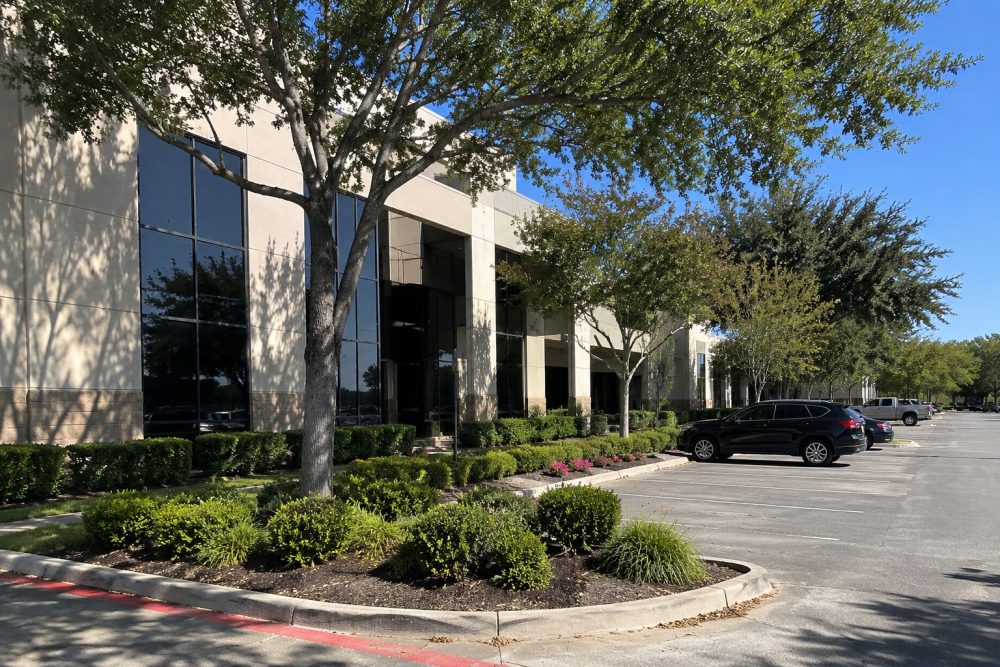
Commercial Landscaping Solutions Tailored to Dallas Properties
Dallas commercial landscaping works best when plant selection, irrigation, maintenance, and enhancements are matched to the property’s purpose. A medical facility has different priorities than a shopping center, just as an industrial site requires a different landscape strategy than a corporate office.
Climate also shapes those decisions. National Weather Service climate normals show that Dallas/Fort Worth’s normal high temperature reaches 95.6°F in July and 95.8°F in August. That summer heat makes drought tolerance, irrigation efficiency, soil health, and appropriate plant selection especially important.
What Landscaping Works Best for Office and Corporate Properties?
Office and corporate landscapes should create a polished first impression while providing comfortable, functional outdoor areas for employees and visitors. Entrances, walkways, parking areas, and gathering spaces deserve particular attention because they influence how people experience the property.
Effective solutions can include:
- Professionally maintained turf and planting beds
- Seasonal color around entrances and signage
- Shade trees near pedestrian areas
- Defined walkways with clear visibility
- Outdoor seating and gathering spaces
- Irrigation monitoring and water management
- Routine pruning to keep trees and shrubs attractive and safe
Trees and vegetation can be particularly valuable on highly developed Dallas properties. A City of Dallas urban heat study released in 2025 found a maximum temperature difference of 12°F during its 2024 mapping campaign and noted that areas with fewer trees and more pavement can become significantly hotter than greener areas.
For corporate campuses, adding and maintaining healthy tree canopy and vegetation can therefore contribute to both appearance and outdoor comfort.
How Should Retail Centers and Commercial Properties Be Landscaped?
Retail landscaping should attract attention without obstructing signs, storefronts, traffic visibility, or pedestrian movement. The landscape needs to stay attractive under heavy use while helping customers navigate the property safely.
Shopping centers and other high-traffic commercial properties often benefit from low-maintenance shrubs, durable turf, clearly edged planting beds, and carefully placed seasonal color. Plant material near entrances can create visual interest, while trees throughout large parking areas can introduce shade and soften expanses of pavement.
Visibility is equally important. Overgrown shrubs or poorly positioned trees can block directional signs, storefronts, or sightlines for vehicles. Routine pruning and landscape inspections help keep vegetation proportional to the space.
For retail properties, landscape maintenance schedules should also account for customer traffic. Tasks such as mowing, blowing, pruning, and irrigation inspections can be planned to minimize disruption during the busiest periods.
What Do Healthcare, Senior Living, and Multifamily Properties Need?
Landscaping for healthcare, senior living, and multifamily communities should balance appearance with accessibility, comfort, safety, and long-term reliability. These landscapes are experienced up close and frequently, so small maintenance problems can quickly affect how residents, patients, families, and visitors perceive the property.
Useful strategies include:
- Shaded seating and gathering areas
- Clear, unobstructed pedestrian routes
- Plants that do not overwhelm sidewalks or entrances
- Consistent turf and bed maintenance
- Tree inspections and pruning
- Irrigation systems designed to prevent overspray on walkways
- Seasonal enhancements in prominent community spaces
Multifamily communities may also use landscaping to distinguish amenities such as pools, clubhouses, leasing offices, and outdoor recreation areas. Consistent landscape quality across these spaces can help create a cohesive property identity rather than a collection of disconnected outdoor areas.
Texas A&M AgriLife recommends putting the right plant in the right place and providing only the necessary inputs, including water and fertilizer, as part of WaterWise landscape management. That principle is particularly useful on large properties where inefficient plant choices can multiply maintenance and irrigation demands.
How Are Industrial and Warehouse Landscaping Needs Different?
Industrial and warehouse properties typically need landscaping that is durable, efficient, presentable, and easy to maintain across large sites. These facilities may have expansive parking lots, loading areas, perimeter landscapes, detention areas, and high vehicle traffic, making practicality especially important.
A strong industrial landscape program may focus on hardy turf and plant varieties, efficient irrigation zones, weed management, tree maintenance, clear sightlines, and attractive entrances.
Not every square foot needs intensive ornamental landscaping. Concentrating higher-impact plantings around entrances, office areas, monument signs, and other visible zones can create a professional appearance while using simpler, lower-maintenance solutions elsewhere.
Water efficiency is also increasingly relevant for large properties. Texas A&M AgriLife reported in 2026 that Texas water demand is projected to increase 17% from 2020 to 2070, highlighting the long-term importance of conservation and irrigation efficiency.
How Can HOAs and Property Managers Reduce Landscape Water Use?
Dallas HOAs and commercial property managers can reduce landscape water use through better irrigation management, appropriate plant selection, mulch, proper mowing, and WaterWise landscape design. Saving water does not necessarily mean sacrificing curb appeal.
Texas A&M AgriLife notes that xeriscaping can combine attractive landscapes with greater water efficiency through planning, soil preparation, plant selection, appropriate irrigation, mulching, and maintenance.
For Dallas properties, irrigation scheduling is especially important. City ordinance generally prohibits lawn and landscape irrigation between 10 a.m. and 6 p.m. from April 1 through October 31, subject to the ordinance’s provisions and exceptions.
Property managers can improve efficiency by regularly checking for:
- Broken or misaligned sprinkler heads
- Water running onto pavement
- Leaking valves
- Zones receiving too much or too little water
- Irrigation schedules that have not been adjusted seasonally
- Plant material poorly suited to its location
These details can have a significant impact across a large commercial portfolio.
Choosing the Right Dallas Commercial Landscaping Strategy
The best landscaping plan begins with the property’s actual needs rather than a standard maintenance checklist. Consider how visitors use the site, which areas create the strongest first impression, where safety or visibility matters most, and which landscape zones consume the most maintenance and water.
For Dallas properties, it is also important to plan for prolonged summer heat and changing water needs. A landscape designed around appropriate plants, efficient irrigation, healthy trees, and proactive maintenance is better positioned to remain attractive without unnecessary resource use.
Metro Lawn Care can bring these elements together into a commercial landscape program tailored to the property’s industry, priorities, and day-to-day demands.
Frequently Asked Questions About Commercial Landscaping in Dallas
What should a commercial landscaping plan include?
A commercial landscaping plan should address turf, trees, shrubs, irrigation, seasonal color, pruning, weed management, property appearance, and site-specific safety concerns. The exact mix should reflect how the property is used and maintained.
What plants are best for Dallas commercial landscapes?
Plants suited to North Texas conditions and the property’s specific sun, soil, water, and maintenance requirements are generally the strongest choices. Texas A&M AgriLife recommends selecting plants appropriate to the location and highlights WaterWise and Texas-adapted landscaping resources.
How often should a commercial property be landscaped?
Maintenance frequency depends on the season, property type, turf growth, plant material, and appearance standards. High-visibility office, retail, multifamily, and healthcare properties may require more frequent attention than lower-traffic industrial areas.
Can commercial landscaping help reduce water use?
Yes. Efficient irrigation, WaterWise plant selection, mulch, proper maintenance, and correcting leaks or overspray can reduce unnecessary landscape water use. Texas A&M AgriLife identifies water conservation as a core component of sustainable Texas landscaping.
Build a Landscaping Program Around Your Property
Your industry, property layout, customers, residents, employees, and maintenance priorities should all influence your landscape strategy. Metro Lawn Care provides commercial landscaping solutions designed around the real-world needs of Dallas properties, helping businesses maintain attractive, functional, and resilient outdoor spaces.
Ready for commercial landscaping tailored to your Dallas property? Contact Metro Lawn Care to start building a solution for your property and industry.